
Missing teeth can affect how you eat, speak, and feel about your smile. You may skip foods you once enjoyed, feel self-conscious in photos, or worry about a denture moving at the wrong time. Dental implants provide a stable option for replacing one tooth, several teeth, or a full arch.
R+R Dental offers dental implants in Hicksville, NY, with clear guidance and personal attention at every stage. Our family-owned practice combines modern treatment with the friendly, thoughtful care patients expect from a neighborhood dental office.
Call (516) 874-7834 or request an appointment to speak with an implant dentist in Hicksville about your options.
What Are Dental Implants?
A dental implant is a small post placed in the jawbone where a tooth is missing. It takes the place of the tooth root and supports a replacement that restores the visible part of your smile.
A typical implant restoration has three parts:
- Implant post: The part placed in the jaw
- Abutment: The connector attached to the implant
- Restoration: The crown, bridge, or denture placed above the gums
As the area heals, the implant bonds with the surrounding bone. This process creates a secure base for the final restoration. According to the American Dental Association, implants can support individual crowns, bridges, or dentures.
The right treatment depends on the number of missing teeth, the health of your gums and jawbone, and the result you hope to achieve.
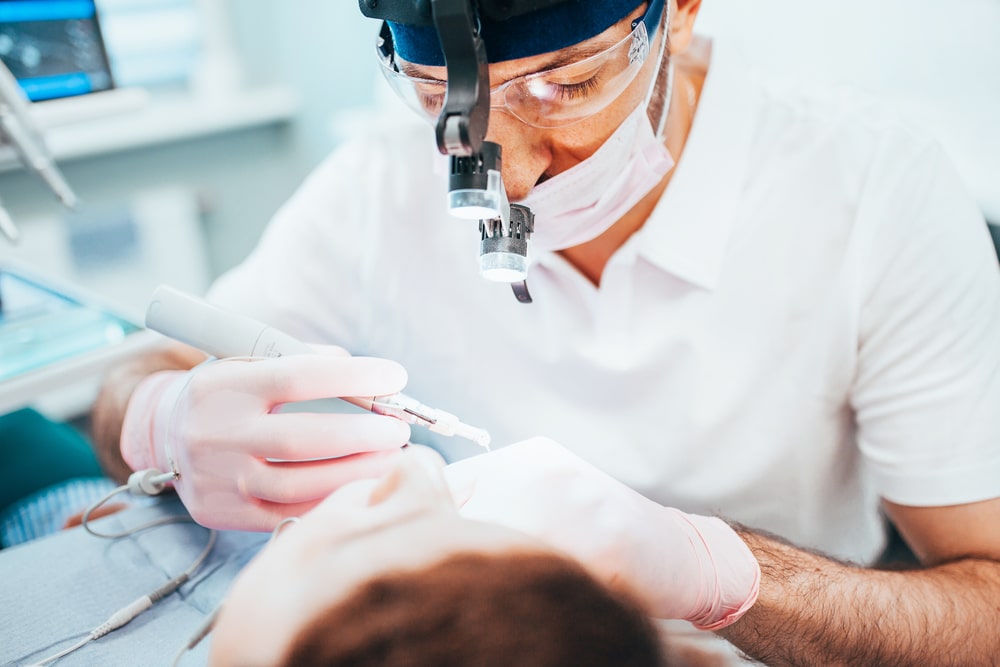
Dental Implant Options for Missing Teeth
Implant treatment can be tailored to many types of tooth loss. One patient may need a single crown. Another may need support for a loose denture or a complete arch of replacement teeth.
Single-Tooth Dental Implants
A single dental implant can replace one missing tooth without relying on the teeth beside it for support. The implant holds a custom crown that fills the open space.
Your crown is designed to fit your bite and coordinate with the shape and shade of the surrounding teeth. Front teeth may need extra attention to gum contours and appearance. Back teeth need enough strength to handle chewing pressure.
Implant-Supported Bridges
An implant-supported bridge can replace several missing teeth in one area. The implants support a connected row of replacement teeth, which means you may not need a separate implant for every missing tooth.
A traditional bridge usually rests on nearby natural teeth. An implant-supported bridge uses posts in the jaw instead. Your dentist will compare the condition of the neighboring teeth, available bone, treatment time, and expected cost before recommending an option.
Implant-Supported Dentures
Implants can also help hold a denture in place. An implant-supported denture may feel more secure during meals and conversations than a conventional removable denture.
Some implant dentures are removable for cleaning. Others remain fixed in place and are removed only by a dental professional. The design depends on your anatomy, the number of implants, and the type of restoration selected.
All-on-4 and Full-Arch Dental Implants
Patients missing most or all of their teeth may qualify for full-arch treatment. All-on-4 and All-on-X restorations use a planned number of implants to support a complete row of replacement teeth.
R+R Dental offers full-arch options, including All-on-4 and TeethXpress treatment in Hicksville. Some patients may qualify for temporary teeth on the day their implants are placed. Your dentist will need to examine your mouth and review your health before confirming whether immediate temporary teeth are appropriate.
Benefits of Dental Implants
Dental implants can restore function while giving replacement teeth a secure, natural-looking foundation.
Eat With Greater Comfort
A stable implant restoration can make it easier to bite and chew. Patients with loose dentures may feel more comfortable eating foods that were previously difficult to manage.
Restore the Appearance of Your Smile
The final crown, bridge, or denture is planned around your mouth and facial features. The goal is a restoration that fits your bite and looks balanced with the rest of your smile.
Help Maintain the Jawbone
When a tooth is lost, the bone in that area no longer receives pressure from the tooth root. The American Academy of Implant Dentistry explains that an implant can help preserve bone at the treatment site while supporting replacement teeth.
Speak With More Confidence
Missing teeth and unstable dentures can change how certain words sound. A secure restoration may help you speak more comfortably at work, during meals, and in social settings.
Choose a Long-Term Solution
Dental implants are intended to remain in place for many years. Their condition depends on gum health, daily cleaning, regular dental visits, general health, and the amount of force placed on the restoration.
The implant post and the visible restoration may not wear at the same rate. A crown, bridge, or denture may need maintenance or replacement before the implant itself does.
Who Can Get Dental Implants?
Many adults with missing teeth may qualify for implant treatment. Age alone does not decide whether someone is a candidate.
Your dentist will examine your mouth and review your medical history before recommending care. The evaluation usually considers:
- Gum health and active infection
- The amount of bone at the treatment site
- Current health conditions and medications
- Tobacco use and other healing concerns
- Your ability to clean the implant restoration
The American Dental Association notes that tobacco use and some chronic health conditions can affect healing. These concerns require individual review rather than a single rule for every patient.
Can You Get Implants With Bone Loss?
Bone loss does not always prevent implant treatment. Some patients still have enough support for placement. Others may need a bone graft first.
A bone graft adds material where the jaw needs more volume. In some cases, grafting and implant placement can happen during the same appointment. Other patients need time for the graft to heal before the implant is placed.
Your dentist will use an examination and appropriate imaging to evaluate the bone. If gum disease is present, that may also need treatment before moving forward.
The Dental Implant Process
Implant treatment happens in stages. The exact sequence depends on your health, the number of missing teeth, and whether you need extractions, grafting, or a full-arch restoration.
Consultation and Evaluation
Your first visit begins with a conversation. We will ask which teeth are missing or failing, how the problem affects your daily life, and what you want from treatment.
Your dentist will review your dental and medical history, examine your teeth and gums, and evaluate the treatment area with appropriate imaging. You will also be able to compare implants with bridges, dentures, and other restorative choices.
Personal Treatment Planning
Your plan may include the number and location of implants, the type of final restoration, and any treatment needed before placement. It will also address temporary teeth, expected healing time, comfort options, and estimated fees.
We explain the sequence in plain language before treatment begins. You should know what is planned, why it is recommended, and what each stage involves.
Implant Placement
The treatment area is numbed before the implant is placed. Your dentist positions the post in the jaw according to the treatment plan.
Depending on the case, you may receive a temporary tooth or denture while healing. Selected full-arch patients may qualify for immediate temporary teeth.
Healing
The implant needs time to bond with the surrounding bone. A straightforward case may take several months from placement to the final restoration. Bone grafting, several implants, or a more complex restoration can extend the schedule.
The American Academy of Implant Dentistry states that treatment time varies based on the condition of the jawbone, the patient’s medical history, the technique used, and the selected materials.
You will return for follow-up visits so the team can monitor healing. We will also provide instructions for food choices, oral hygiene, medication, and symptoms that require a call to our office.
Final Crown, Bridge, or Denture
Once the implant is ready, your final restoration is attached. Your dentist checks the fit, bite, appearance, and comfort before completing treatment.
You will receive specific cleaning instructions. A single implant crown may be cared for much like a natural tooth. A bridge or full-arch restoration may require floss threaders, special brushes, or other tools.
Comfortable Implant Care in Hicksville
Dental surgery can feel intimidating, especially for patients who have had unpleasant dental experiences. R+R Dental takes time to explain treatment and answer questions before care begins.
Our office is known for friendly service, modern treatment, and a clean environment. We want patients to feel heard and well cared for rather than rushed through an appointment.
Our comfort menu includes:
- Neck pillows, blankets, and jaw rests
- Dark glasses, ear plugs, and lip balm
- Television, music, and free Wi-Fi
- Refreshments and charging access
- Massage chairs
Tell us what has made dental care stressful in the past. We can explain what to expect, discuss the comfort options available for your procedure, and give you space to ask questions.
Dental Implant Cost in Hicksville, NY
Dental implant costs vary because each treatment plan requires different care. Replacing one tooth with an implant and crown is different from restoring a full arch.
Your estimate may depend on:
- The number of teeth being replaced
- The number of implants required
- The type of final restoration
- Extractions, grafting, or gum treatment
- Imaging, materials, and case complexity
Temporary teeth and follow-up needs may also affect the total fee. The American Academy of Implant Dentistry notes that costs differ because treatment plans are based on each patient’s needs.
A consultation gives your dentist the information needed to prepare a personal estimate.
Insurance and Payment Options
Insurance coverage varies by plan. Our team can review your benefits and discuss expected out-of-pocket costs before treatment begins.
R+R Dental also offers an in-house savings plan for patients without insurance or with out-of-network coverage. Payment plans may also be available.
Call (516) 874-7834 to schedule an implant consultation and receive an estimate based on your treatment needs.
Dental Implants vs. Bridges and Dentures
Each tooth replacement option has its own benefits, care requirements, and timeline.
| Treatment | Often Used For | Fixed or Removable | Main Source of Support |
| Implant and crown | One missing tooth | Fixed | Implant in the jaw |
| Implant-supported bridge | Several missing teeth | Usually fixed | Dental implants |
| Traditional bridge | One or more missing teeth | Fixed | Nearby natural teeth |
| Conventional denture | Many or all missing teeth | Removable | Gums and oral tissues |
| Implant-supported denture | Many or all missing teeth | Fixed or removable | Dental implants |
A traditional bridge may restore a gap without implant surgery, though it often requires reshaping the teeth beside the space. A conventional denture can replace many teeth without implants, but it may feel less secure. Implant treatment usually takes longer because the bone needs time to heal.
Your dentist will compare the options that fit your mouth and explain differences in cost, maintenance, comfort, and treatment time.
Schedule a Dental Implant Consultation
A consultation can help you understand whether implants are right for you. Your dentist will review your oral health, compare treatment options, discuss timing, and prepare an estimate based on your needs.
Call (516) 874-7834 or use our online contact form to schedule an appointment with an implants dentist in Hicksville, NY.
Frequently Asked Questions About Dental Implants
What is a dental implant?
A dental implant is a replacement tooth root placed in the jaw to support a crown, bridge, or denture. It can replace a single missing tooth or help restore multiple missing teeth.
Who is a good candidate for dental implants?
A good candidate generally has healthy gums, enough jawbone support, and overall health that allows for implant treatment. R+R Dental will evaluate your mouth, bone, medical history, and goals before making a recommendation.
Are dental implants painful?
The procedure is planned with comfort in mind, and the team will talk through anesthesia or sedation options when appropriate. Some soreness during healing is normal, and R+R Dental will provide aftercare instructions.
Should I choose an implant, bridge, or denture?
The right choice depends on how many teeth are missing, jawbone health, timeline, cost, and whether you want a fixed or removable option. A consultation helps compare the choices clearly.
How long does the implant process take?
Some cases take a few months from implant placement to the final restoration. Treatment may take longer when the patient needs grafting, an extraction, several implants, or a full-arch restoration.
Your dentist will give you an estimated schedule after evaluating your mouth and planning the procedure.
How much are dental implants in Hicksville, NY?
The cost depends on the number of implants, the type of restoration, selected materials, imaging, extractions, grafting, and the complexity of the case.
R+R Dental provides a personal estimate after the consultation. Our team can also review insurance benefits and explain savings or payment options.
Will I need a bone graft?
A bone graft is not necessary for every patient. Your dentist will evaluate the amount and condition of the bone where the implant will be placed.
If the area needs more support, the treatment plan will explain when grafting should occur and how it may affect the healing schedule.
How long can dental implants last?
Dental implants can remain functional for many years when they are placed properly and cared for consistently. Daily brushing, cleaning around the restoration, professional cleanings, and routine examinations all play a role.
The crown, bridge, or denture attached to the implant may require repair or replacement sooner than the post in the jaw.
